
Bristol Neighbors Block Record Sources
The most useful official layers answer different questions about a Bristol block. Tennessee Property Assessment Data can connect a parcel to an owner field, property address, and parcel components. The county map gives an orientation to nearby mapped parcels. A Register record traces land parties, while a Bristol Public Library street guide preserves a dated household snapshot. None is a current resident roster. Start with the source that matches the narrow question, then retain the difference between an owner, a land party, a historical householder, and a present occupant.
| Block source | What it can show around an address | Access and boundary |
|---|---|---|
| TPAD and county GIS | Adjacent parcels, property addresses, owner field, parcel components, and mapped geometry | Public property and map tools; not a household roster or survey-quality boundary claim. |
| Register of Deeds index | Land parties and a parcel's document trail when the legal description is known | Document parties are not a list of current Bristol neighbors. |
| BPL Hill street guide | Historic household or business opposite a numbered address | Selected digitized years with combined Tennessee and Virginia Bristol coverage. |
| Election Commission | Controlled voter-record request channel | No public block or street lookup; statutory certification and protection rules apply. |
| Historic districts and Watch | Neighborhood context and voluntary community-organizing contact | No verified public resident or member directory. |
| City permit or code file | An address-specific project record if a responsive file exists | Use a precise Tennessee Public Records Act request; no public browse portal was verified. |
A Bristol neighbors search should end when the property question has been answered. A map edge, name in an assessment row, or historic street listing never establishes that someone is a present neighbor.
Mapping Bristol Neighbors Through Parcels
The adjacent-parcel method is deliberately modest. Locate the starting address through TPAD or the Sullivan map, then look at parcel geometry rather than guessing from street numbers. Visually note parcels that touch the target or lie across the public right-of-way. Record their parcel IDs or map elements and query TPAD one parcel at a time. This produces an adjacent property inventory. It does not produce a roster of the people who live on a Bristol block.
- Find the property in TPAD by address or parcel information, selecting Sullivan County before searching.
- Open the Sullivan County interactive zoning and GIS map and search the address for spatial orientation.
- Visually note adjoining or across-right-of-way parcels, along with their map or parcel clues. Road, easement, and subdivision layout can make a touching shape a poor proxy for proximity.
- Query each selected parcel in TPAD and keep the result labelled as an owner-record lead, not an occupancy finding.
The official map documentation verifies address search plus zoning-layer visibility and transparency controls. It does not verify a buffer, radius, select, measure, or owner-mailing tool, so those functions should not be assumed. For a full named-street record chain instead of an immediate block question, use the Bristol street directory.
Bristol Neighbors Owner-Record Limits
An assessment owner field is evidence of a property connection, not proof that the owner lives in the building. TPAD's inspected grid can show an owner, property address, control map, group, parcel, subdivision, lot, class, special-interest indicator, and sale date. It does not list non-owner occupants, household members, utility customers, or a guaranteed current owner mailing address. A parcel's situs address is the land or building location. Its legal description is the land identifier carried into a deed. Neither term identifies a household.
| Official record category | What it supports | What it cannot establish |
|---|---|---|
| Assessment and deed records | Parcel, ownership, land-party, and transaction questions | Who presently occupies every address on the block |
| Historic directory and street guide | A dated householder or business relationship at a numbered address | Continuous occupancy or a current household |
| Commercial neighbor-search category | Possibly mixed leads from records of differing dates | Current, complete, or custodian-verified household information |
This distinction is especially useful in Bristol. A historic directory may cross the state line, and a deed party can be a seller, purchaser, trustee, or other recorded participant. Compare dates and jurisdiction before giving an owner result any broader meaning.
Note: Property ownership, a deed party, and a historic householder are three different kinds of evidence, not interchangeable proof.
Bristol Neighbors in Historic District Context
Historic context can explain why an address appears in a certain type of source without turning a district into a member list. City material identifies Fairmount and Holston Avenue as Bristol's two residential historic districts. Fairmount includes Tudor Revival and Bungalow forms. Holston Avenue contains 132 principal properties and includes Queen Anne and Colonial Revival homes. Those details help frame a building or street history, but no official resident or district-member directory was verified for either area.
| Bristol community layer | Useful record context | Directory limit |
|---|---|---|
| Fairmount Historic District | Residential architectural and neighborhood history | Historic-district information does not identify present residents. |
| Holston Avenue Historic District | Documented historic setting with 132 principal properties | No verified public member or resident roster. |
| Bristol Exchange meetings | Community-engagement locations including Fairmount, Holston View, Anderson, Avoca, and Haynesfield | Meetings are not lists of neighborhood households. |
For the historical block, Bristol Public Library's digitized Hill volumes are the better dated source. Their household/street guide orders streets alphabetically and numbers numerically, placing householders or concerns opposite an address. Check the selected year, the intersection clues, and whether the listing lies on the Tennessee or Virginia side before treating it as a Bristol record.
Bristol Neighbors Watch Contact
Residents who want a voluntary community connection can ask Bristol Police for help organizing a Neighborhood Watch. This is a civic contact route, not a way to obtain a resident list. Police Support Services includes community policing and Watch initiation, so the request can be framed around a block's voluntary participation rather than names drawn from property or voter records.
| Community contact | Details | Appropriate use |
|---|---|---|
| Police Support Services | Capt. Dannielle Eller, 801 Anderson Street, 423-989-5568 | Ask about beginning a voluntary Bristol Neighborhood Watch. |
| City historic-district material | Fairmount and Holston Avenue context | Research the neighborhood's documented history, not its household list. |
The City of Bristol Neighborhood Watch information describes the city channel for block-level organizing.
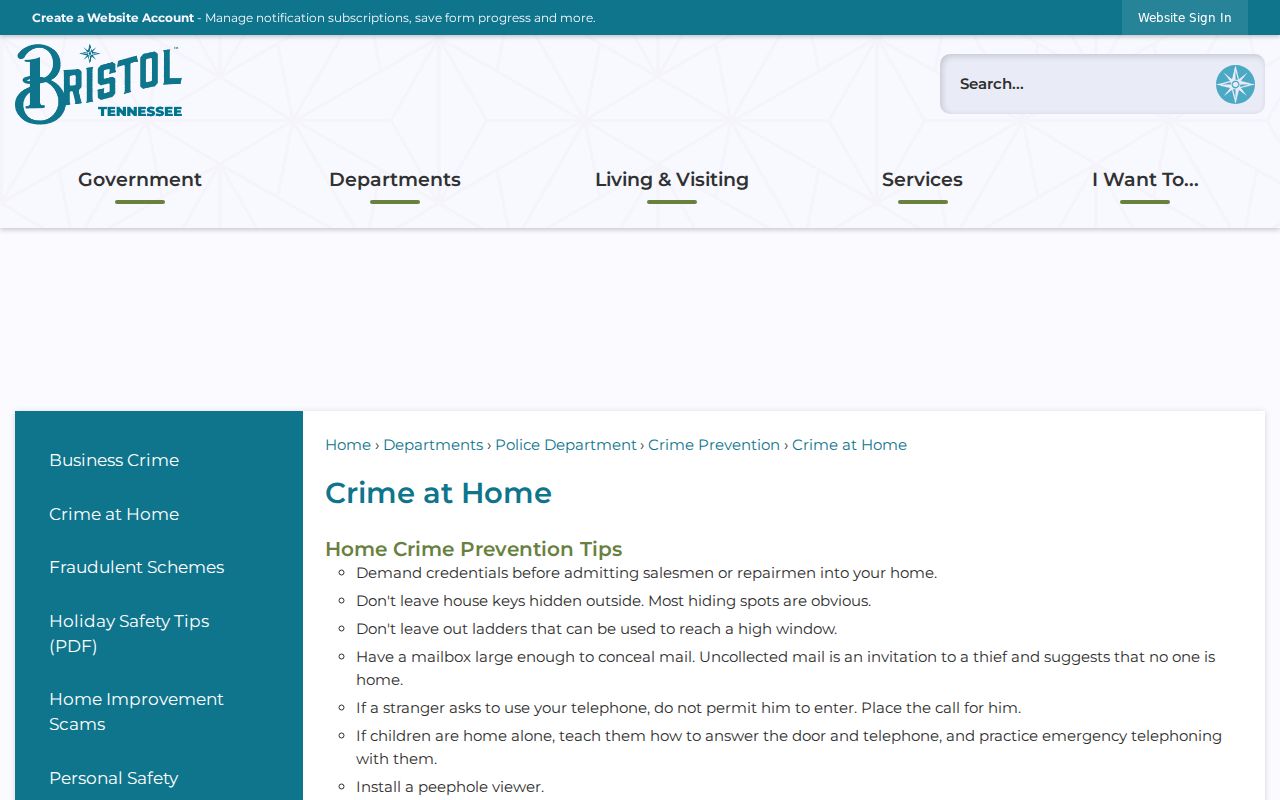
That source supports a request for organizing help. It does not support a claim that the City holds a public roster of Watch participants or Bristol neighbors.
Bristol Neighbors Voter-Record Limits
The Tennessee Voter Registration Lookup and Absentee Ballot Status Tracker cannot search a Bristol block. It requires a county, first name, last name, birth month, and birth year to authenticate one registered voter's own record. It has no browse-by-street feature. Tennessee Code Annotated § 2-2-138 permits certain voter-list or voter-history requests subject to production cost, county control, and required certification for statewide political-purpose lists. The Sullivan County Election Commission is the correct place to ask for a current request condition or form.
Social Security numbers, driver-license information, unique registration identifiers, citizenship proof, absentee-request data, and Safe at Home voter information stay private. A voter record process should never be represented as a tool for identifying people on the block.
Bristol Neighbors Custody-Search Boundaries
Custody databases answer custody questions, not neighbor questions. The Sullivan County Sheriff inmate roster is a changing current-custody source. Its detailed fields can include booking and charge information, but an entry is not proof of guilt, a case disposition, or a residence. It cannot be used to create a Bristol neighbors list.
The roster's search screen belongs to the Sheriff's custody system. Confirm case status with the court or clerk and do not treat a booking record as a property or neighborhood record.
The Federal Bureau of Prisons inmate locator is similarly distinct. It covers federal custody only, rather than county bookings, owner records, or local households.
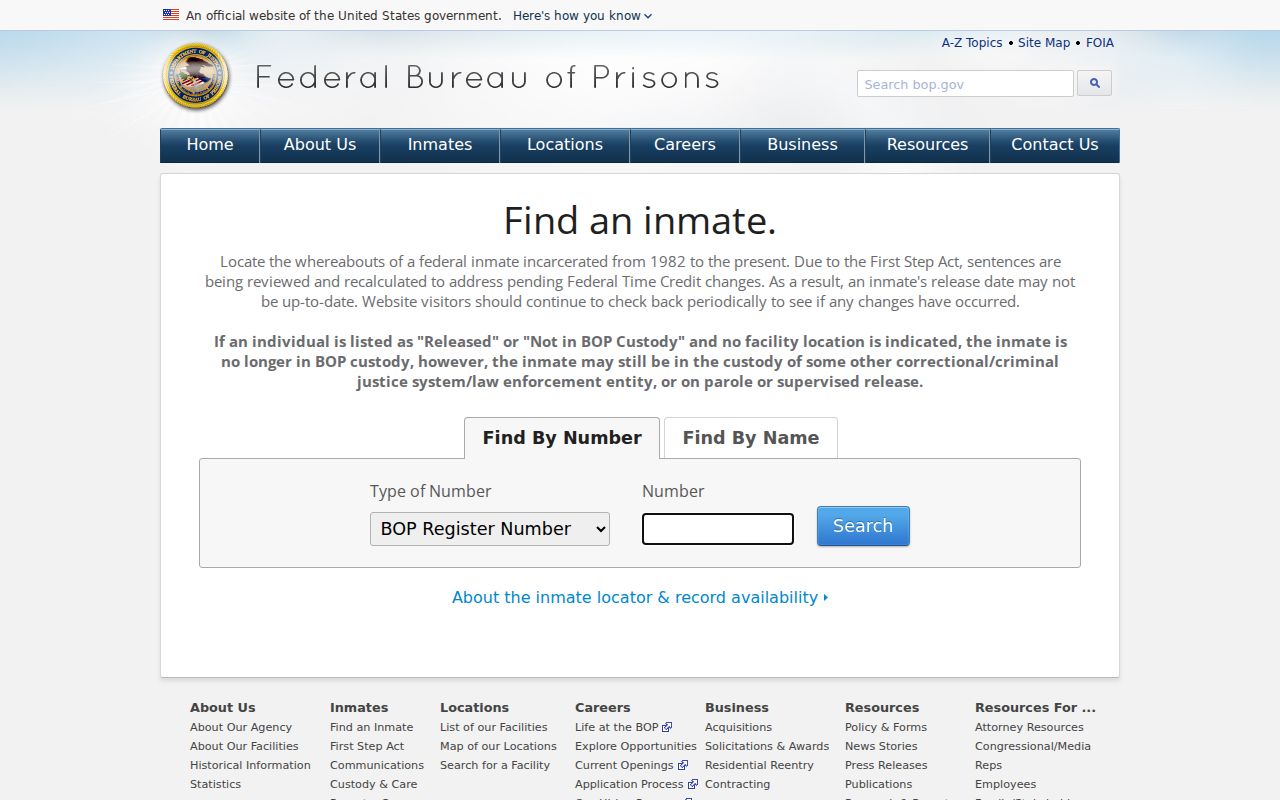
Federal results must not be read as an address or neighborhood finding. Keep them separate from the adjacent-parcel process and direct safety concerns through official emergency or non-emergency channels as appropriate.
Privacy Limits for Bristol Neighbors
Private household data does not become available because parcels sit close together. Non-owner occupants, utility and delivery information, and restricted motor-vehicle records are outside this block method. Tennessee treats utility private records as confidential, while federal Driver's Privacy Protection Act rules limit personal information from motor-vehicle records. Some court records are protected too. A missing result may reflect a normal boundary, not a gap to work around.
The Tennessee Safe at Home Address Confidentiality Program, Tenn. Code Ann. §§ 40-38-601 et seq., gives qualifying survivors a substitute address for specified government purposes. It does not erase every earlier record, but no one should try to identify a participant through other sources. For an official Bristol permit or code question, make a narrow request under the Tennessee Public Records Act that names the address, date range, and record type, and accept lawful redactions.
Lawful personal use. Bristol neighbors records can support property history, civic curiosity, and voluntary community contact. Do not use any result to watch, stalk, harass, intimidate, or harm another person.